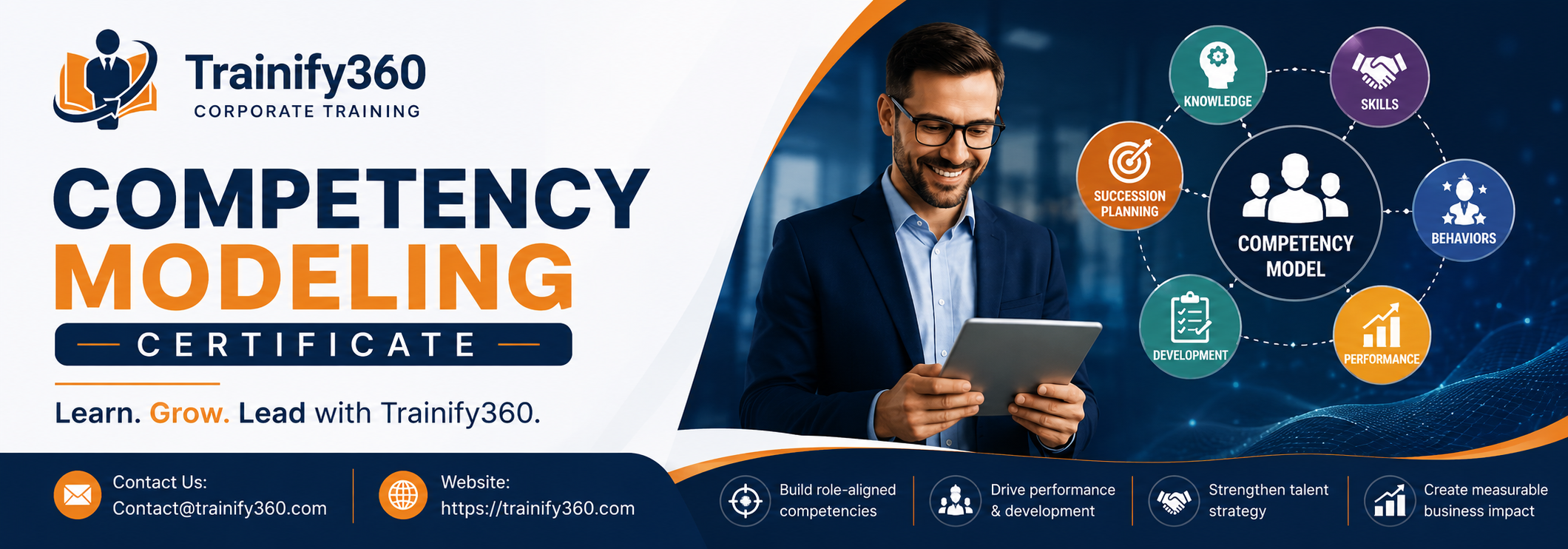
The Competency Modeling Certificate equips learning and development (L&D), HR and talent professionals with the knowledge and practical skills to design competency models that support business performance and workforce development. Through a structured, step-by-step approach, you'll learn how to identify the competencies required for specific roles...
This programme is designed for ambitious professionals who are already shaping teams, driving business decisions, and are now ready to amplify their leadership impact.
The Competency Modeling Certificate is designed for professionals responsible for developing talent, improving workforce capability and aligning employee performance with organizational goals, including:
Competency modeling provides a structured framework for identifying the knowledge, skills and behaviors employees need to succeed in specific roles. It helps learning and development (L&D) professionals make informed talent decisions, support targeted upskilling initiatives, create personalized development plans and strengthen succession planning strategies. By aligning competencies with business goals and job requirements, organizations can design learning programs that deliver measurable performance improvements.
In this Training Industry Certificate Program, you’ll learn a practical, step-by-step approach to building and implementing competency models tailored to your organization. The course covers how to identify critical competencies, develop clear competency definitions and behavioral indicators, validate your models with stakeholders and gain organizational support for successful implementation. You’ll also explore effective methods for assessing employee competency levels, identifying skill gaps and using competency data to guide strategic talent development initiatives.
Identify the key competencies required for specific roles and functions by using multiple sources of information.
Develop customized competency definitions and behavioral indicators that align with your organization's goals.
Refine, validate and maintain competency models to ensure they remain accurate, relevant and aligned with evolving business needs.
Assess individual and team competency levels to identify development priorities and critical skill gaps.
Build stakeholder support and effectively collaborate with leaders throughout the development and implementation of competency models.
Upon successful completion of the Competency Modeling Certificate, participants will be able to:
Choosing the right training partner determines whether learning translates into real business outcomes. Trainify360 is built around one principle—training must deliver measurable impact, not just knowledge.
Business-First Approach
Every program is aligned to business goals such as productivity, revenue growth, efficiency, and performance improvement—not just theory.
Practical, Hands-On Learning
Participants don’t just learn concepts—they work on real use cases, tools, and scenarios they can apply immediately in their roles.
Cross-Functional Expertise
Programs are designed for diverse teams—HR, Sales, Marketing, Finance, IT, and Operations—ensuring organization-wide capability building.
Industry-Relevant Content
Training is customized based on industry needs, including IT, Manufacturing, BFSI, Healthcare, Retail, and more.
Proven Training Methodology
Built on globally recognized frameworks such as ADDIE, Kirkpatrick Model, and Bloom’s Taxonomy to ensure structured learning and measurable outcomes.
AI-Powered Learning Experience
Advanced programs integrate AI-driven tools, simulations, and insights to enhance engagement and effectiveness.
Trainify360 certifications are designed to validate real workplace capability not just course completion. Each certification reflects practical skill application, behavioral alignment, and professional readiness aligned with corporate standards. Recognized by organizations for its business relevance, Trainify360 certification strengthens employee credibility, supports leadership development, and reinforces a culture of professionalism and accountability across the enterprise.