Emotional Intelligence for Leaders: The Competitive Advantage Modern Organisations Can't Ignore
Leadership challenges rarely stem from a lack of technical expertise. More often, they emerge from how leaders communicate, influence, navigate conflict, manage pressure, and build trust across teams.
Organisations spend millions developing strategic capabilities, digital transformation initiatives, and operational efficiencies. Yet many overlook a leadership skill that quietly determines whether those investments succeed or fail: Emotional Intelligence (EQ).
The reality is straightforward. Employees may join organisations for opportunities, compensation, or brand reputation, but they often stay or leave because of their direct manager.
For CHROs, HR leaders, and Learning & Development professionals, Emotional Intelligence is no longer a "nice-to-have" leadership trait. It has become a business-critical capability that directly impacts employee engagement, retention, collaboration, and organisational performance.
The leaders who consistently build high-performing teams are rarely the smartest people in the room. They are often the leaders who understand people best.
What Is Emotional Intelligence?
Emotional Intelligence refers to a leader's ability to recognise, understand, manage, and influence emotions, both their own and those of others.
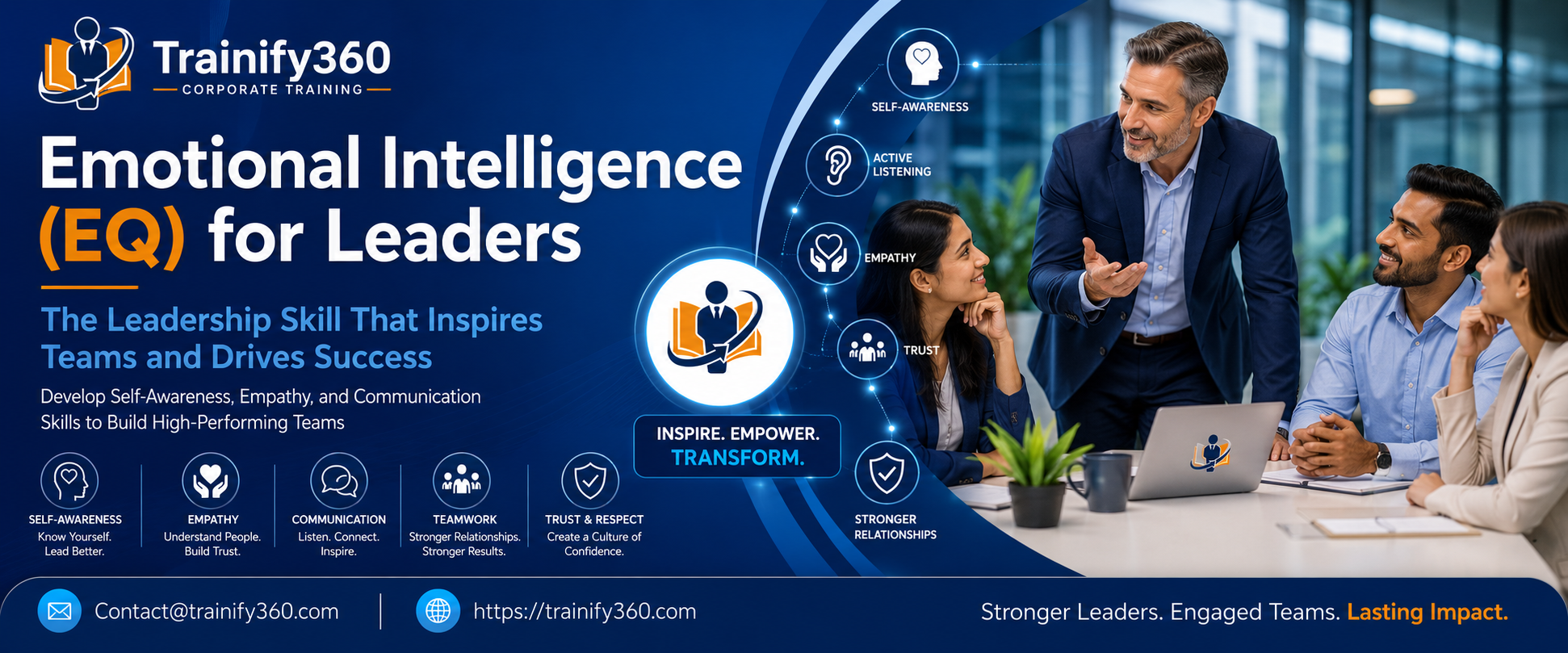
Popularised by psychologist Daniel Goleman, Emotional Intelligence is commonly structured around five core competencies:
- Self-awareness
- Self-regulation
- Motivation
- Empathy
- Social skills
While IQ helps leaders solve problems, EQ helps them solve people challenges. And in today's workplace, people's challenges often become business challenges.
Why Emotional Intelligence Matters More Than Ever
Organisations are navigating an increasingly complex workplace environment. Hybrid work models, Multi-generational teams, Global collaboration, Rapid organisational change, Employee well-being concerns, and constant business disruption. Each of these factors increases the emotional demands placed on leaders.
Technical expertise alone cannot address uncertainty, resistance to change, disengagement, or interpersonal conflict.
Leaders with strong emotional intelligence create stability during uncertainty and connection during disruption. That capability has measurable business value.
The Five Pillars of Emotional Intelligence for Leaders
1. Self-Awareness: The Foundation of Leadership Effectiveness
Many leadership challenges begin with a lack of self-awareness.
Leaders who are unaware of their communication style, emotional triggers, strengths, and blind spots often unintentionally create friction within teams.
Self-aware leaders consistently ask:
- How do my actions impact others?
- How do I respond under pressure?
- What leadership behaviors help or hinder team performance?
A leader who understands their own emotions is better equipped to manage them. Without self-awareness, leadership development becomes guesswork.
Practical Example
A department manager receives critical feedback during a leadership meeting. Rather than becoming defensive, they acknowledge the feedback, reflect on the concern, and use it as a development opportunity. This response builds credibility and trust.
2. Self-Regulation: Managing Pressure Without Losing Influence
Leadership comes with pressure, missed targets, customer escalations, and budget constraints. Workforce challenges.
The question isn't whether leaders will face pressure. The question is how they respond when pressure arrives. Leaders with strong self-regulation maintain composure, make rational decisions, and avoid emotional reactions that damage relationships.
Employees closely observe how leaders behave during difficult situations. Calm leaders create confident teams. Reactive leaders create uncertainty.
3. Empathy: The Leadership Skill That Drives Engagement
Empathy is often misunderstood. It is not about lowering standards or avoiding accountability. It is about understanding perspectives before making decisions.
Employees want leaders who listen, understand challenges, and demonstrate genuine concern for their experiences.
Empathetic leaders are better equipped to:
- Manage conflict
- Build trust
- Support employee well-being
- Improve engagement
- Strengthen workplace relationships
Research consistently shows that employees who feel understood by their leaders are more likely to remain engaged and committed. Empathy has become a strategic leadership capability.
4. Social Skills: Building Influence Across the Organization
Leadership influence extends beyond direct reporting relationships. Today's leaders must collaborate across departments, functions, geographies, and stakeholder groups.
Strong social skills help leaders:
- Build relationships
- Influence decisions
- Foster collaboration
- Resolve conflicts
- Navigate organisational dynamics
The ability to build meaningful professional relationships often separates effective leaders from exceptional leaders. Influence is rarely achieved through authority alone. Relationships matter.
5. Motivation: Leading with Purpose and Resilience
Emotionally intelligent leaders demonstrate intrinsic motivation. They remain focused on long-term goals, maintain optimism during setbacks, and inspire others through purpose-driven leadership.
Motivated leaders create momentum. They help teams navigate uncertainty while maintaining focus on desired outcomes.
This becomes particularly important during organisational transformation, restructuring, or periods of rapid change.
The Business Impact of Emotional Intelligence
Organisations frequently associate Emotional Intelligence with leadership effectiveness. The impact extends much further.
Employee Engagement
Employees are more engaged when they trust their leaders and feel psychologically safe within their teams.
Retention and Talent Stability
Emotionally intelligent managers reduce voluntary turnover by creating positive employee experiences.
Productivity and Performance
Teams perform better when communication is clear, relationships are strong, and conflicts are managed effectively.
Leadership Pipeline Development
Future leaders learn leadership behaviors from current leaders. Strong EQ creates stronger leadership cultures.
Organizational Agility
Leaders with high emotional intelligence navigate change more effectively and help teams adapt faster.
Common Emotional Intelligence Mistakes Leaders Make
Even experienced leaders can unintentionally undermine trust and engagement. Common mistakes include:
Assuming Logic Alone Drives Decisions
Most workplace decisions involve both logic and emotion. Ignoring emotional factors often creates resistance.
Avoiding Difficult Conversations
Unresolved issues rarely disappear.
They typically grow into larger performance challenges.
Reacting Instead of Responding
Emotional reactions can damage credibility and workplace relationships.
Lack of Active Listening
Listening to respond is different from listening to understand.
Employees notice the difference.
Ignoring Employee Well-Being
Burnout, stress, and disengagement directly impact performance.
Emotionally intelligent leaders recognise these signals early.
How Organizations Can Develop Emotional Intelligence in Leaders
Unlike personality traits, Emotional Intelligence can be developed through intentional learning and practice.
The most effective organisations integrate EQ development into broader leadership capability strategies. Best practices include:
Leadership Assessments
360-degree feedback and behavioural assessments help leaders identify strengths and development areas.
Executive Coaching
Personalised coaching accelerates self-awareness and behavioural change.
Leadership Development Programs
Structured learning experiences provide practical tools and frameworks for emotional intelligence development.
Peer Learning and Reflection
Group discussions and leadership forums encourage knowledge sharing and perspective-taking.
Continuous Reinforcement
Behaviour change requires ongoing practice, feedback, and accountability.
One workshop alone rarely creates lasting leadership transformation.
The Future of Leadership Is Human-Centred
As artificial intelligence, automation, and digital transformation continue reshaping the workplace, uniquely human leadership capabilities will become increasingly valuable. Technical skills can be taught.
Processes can be automated. Emotional Intelligence remains significantly harder to replicate.
Future-ready leaders will need to:
- Lead hybrid teams effectively
- Navigate workforce uncertainty
- Foster inclusion and belonging
- Support employee well-being
- Build trust in rapidly changing environments
Organisations that prioritise Emotional Intelligence development today will build more resilient leadership pipelines tomorrow.
Conclusion
Emotional Intelligence is no longer a soft skill. It is a leadership performance skill.
Leaders with strong EQ communicate more effectively, build stronger relationships, navigate challenges with confidence, and create environments where employees can thrive.
For CHROs, HR leaders, and Learning & Development professionals, investing in Emotional Intelligence development represents one of the highest-impact leadership investments available. The benefits extend beyond individual leaders to influence engagement, retention, productivity, culture, and long-term business performance.
At Trainify360, we help organisations develop emotionally intelligent leaders through practical, business-focused learning experiences that drive measurable behavioural change and sustainable organisational success.
Because leadership effectiveness begins with understanding people.