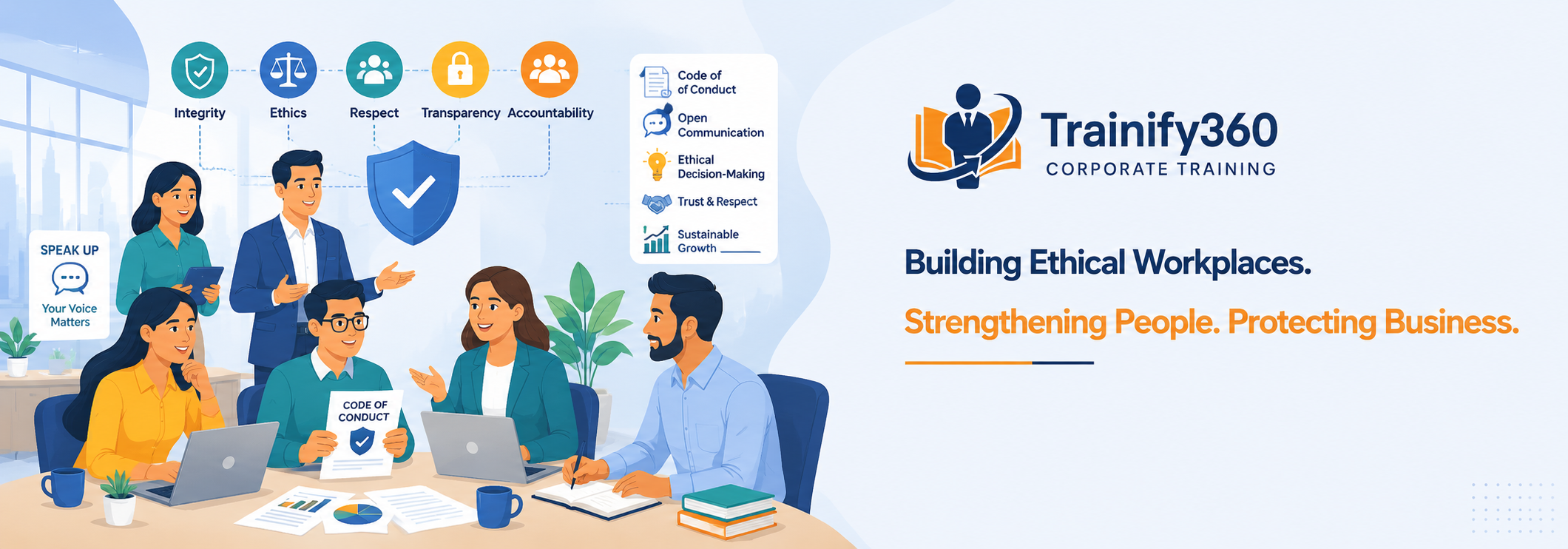
Moving Beyond Compliance: Creating an Ethical Workplace Culture
Most organisations have no shortage of policies. There are codes of conduct, anti-bribery guidelines, information security policies, POSH frameworks, whistleblower mechanisms, and mandatory compliance programmes. Employees acknowledge these documents, complete annual training, and certify that they understand the organisation's expectations.
From a governance perspective, everything appears to be in place. Yet organisations continue to face ethical challenges. Data is mishandled, conflicts of interest go unreported, procurement decisions are questioned, employees hesitate to report misconduct, and workplace behaviour sometimes falls short of the standards the organisation claims to uphold.
This raises an uncomfortable but necessary question. If organisations have invested in compliance programmes, why do ethical failures still occur?
The answer is simple. Policies establish expectations, but they do not determine behaviour. Culture does.
Employees make hundreds of decisions every day that are never covered word-for-word in a policy document. How they respond in those moments depends far more on the environment they work in than on the compliance module they completed six months ago.
Creating an ethical workplace, therefore, requires a broader approach. Compliance provides the framework. Culture ensures that the framework is reflected in everyday decisions.
Compliance Is the Starting Point, Not the Destination
Compliance exists for good reason. It helps organisations meet legal obligations, reduce regulatory risk and create consistency across the business.
Every responsible organisation needs policies covering areas such as anti-corruption, workplace harassment, data privacy, information security, health and safety and conflicts of interest.
However, expecting policies alone to shape behaviour is unrealistic.
Consider a production supervisor who notices a quality issue close to dispatch, a sales manager under pressure to close a quarterly target, or a procurement executive offered an expensive gift by a supplier. These situations often involve judgement rather than simple rule-following.
A policy may explain what should happen. It cannot prepare employees for every real-world situation they encounter.
That is where organisational culture begins to influence behaviour.
Employees who understand the values behind organisational decisions are far more likely to make responsible choices, even when no one is monitoring their actions.
Ethical Failures Rarely Begin With Major Decisions
One misconception is that ethical failures occur because employees deliberately choose to do the wrong thing.
Experience suggests otherwise.
Most compliance incidents begin with relatively small decisions.
An employee overlooks a procedural step because they are trying to meet a deadline.
Someone shares confidential information with a trusted vendor without considering the implications.
A manager ignores inappropriate workplace behaviour because addressing it feels uncomfortable.
A small exception is made "just this once."
Over time, these exceptions become accepted practices.
This is how ethical risks gradually become organisational risks.
Building an ethical culture means helping employees recognise these situations early, before they develop into larger business problems.
Leadership Behaviour Speaks Louder Than Organisational Values
Many organisations proudly display their values across office walls, websites and employee handbooks.
Employees, however, learn far more from leadership behaviour than from posters.
They observe how leaders respond when targets are missed, how fairly decisions are made, whether difficult conversations are encouraged and whether senior managers follow the same standards expected of everyone else.
If leadership behaviour consistently reflects integrity, transparency and accountability, employees notice.
If leaders bypass processes, tolerate inappropriate behaviour or reward results regardless of how they were achieved, employees notice that too.
Culture is shaped less by what leaders say and more by what they consistently do.
This is why ethical leadership cannot be limited to the executive team.
Supervisors, line managers, plant heads and department leaders influence organisational culture every day through hundreds of routine interactions.
Compliance Training Should Influence Behaviour, Not Simply Meet Requirements
Many organisations still approach compliance training as an annual exercise. Employees complete an online module, answer a series of assessment questions and move on to their next task.
The training is recorded as complete. Whether behaviour changes is another matter altogether. Compliance learning becomes far more effective when employees are encouraged to discuss realistic workplace situations rather than simply reviewing policy documents.
For example:
- How should a manager respond when a high-performing employee violates company policy?
- What should an employee do if they suspect unethical behaviour but lack concrete evidence?
- How should procurement teams handle supplier relationships without creating conflicts of interest?
These conversations encourage employees to think critically rather than memorise procedures.
Learning becomes practical, relevant and far more likely to influence future decisions.
Employees Must Feel Safe to Raise Concerns
One of the clearest indicators of an ethical organisation is whether employees feel comfortable speaking up.
Most organisations already have reporting mechanisms in place.
The challenge is that many employees remain reluctant to use them.
The reason is rarely the absence of policy.
It is the fear of consequences.
Employees worry about damaging relationships, affecting career progression or being viewed as troublemakers.
Building trust requires organisations to demonstrate, consistently, that concerns will be treated fairly, investigated objectively and addressed without retaliation.
When employees believe they can raise concerns without fear, organisations identify risks earlier and resolve issues before they become larger problems.
Ethical Behaviour Should Be Reflected in Performance Conversations
Many performance discussions focus almost entirely on business outcomes.
Targets achieved.
Projects delivered.
Revenue generated.
While these measures remain essential, they tell only part of the story.
The question organisations should also ask is:
How were those results achieved?
An employee who consistently demonstrates integrity, supports colleagues, follows organisational processes and acts responsibly contributes significantly to long-term business success.
Recognising these behaviours reinforces the message that ethical conduct is valued just as highly as commercial performance.
Over time, employees begin to understand that organisational values are not simply aspirational statements. they influence everyday decisions and career progression.
Ethics Is Strengthened Through Everyday Conversations
Creating an ethical workplace is not the responsibility of the compliance function alone.
Managers have frequent opportunities to reinforce ethical thinking during routine business discussions.
Simple questions can change the quality of decision-making.
- Does this decision align with our organisational values?
- Have we considered the potential risks?
- Would we be comfortable explaining this decision to a customer or regulator?
- Are we balancing short-term business objectives with long-term organisational reputation?
When these discussions become part of everyday leadership, ethics gradually becomes embedded in organisational culture rather than remaining confined to policy documents.
Learning and Development Has a Strategic Role to Play
Compliance training should never be viewed as a standalone learning programme.
Learning and Development teams are uniquely positioned to connect ethics with leadership development, onboarding, managerial capability and organisational culture initiatives.
The most effective programmes combine policy awareness with practical application.
Employees learn through realistic case studies, facilitated discussions, behavioural simulations and scenario-based learning that reflects the challenges they encounter in their own roles.
This approach helps employees develop sound judgement rather than simply remembering organisational procedures.
Ultimately, organisations benefit from employees who understand not only what is expected but also why those expectations matter.
Final Thoughts
Building an ethical workplace is not about introducing more policies or increasing the number of compliance courses employees complete each year.
Most organisations already have the necessary frameworks in place.
The real challenge is ensuring those frameworks influence everyday behaviour.
That requires consistent leadership, open communication, meaningful learning experiences and an environment where employees feel confident making responsible decisions—even when those decisions are difficult.
Organisations with strong ethical cultures are generally better equipped to earn employee trust, strengthen customer relationships, reduce business risk and protect their reputation over the long term.
At Trainify360, we believe compliance training should do more than satisfy regulatory requirements. It should help people think critically, act responsibly and make decisions that strengthen both organisational culture and business performance. When ethics becomes part of everyday leadership and learning, compliance stops being an obligation and becomes a natural way of working.