Behavioural Intelligence: The True Competitive Edge in the Age of AI
Not long ago, I was speaking with the leadership team of an organisation that had just introduced AI-powered tools across several business functions. They had done everything by the book, selected the right technology, invested in employee training, and built a detailed rollout plan. From a project perspective, it looked like a textbook implementation.
Even so, progress was slower than expected.
Some teams embraced the new tools immediately. Others became noticeably quieter. Managers observed fewer questions during meetings, but it wasn't because everyone was comfortable with the changes. People were processing something much bigger than a new system. They were wondering what these changes meant for their roles, their careers, and their place in the organisation.
It's a familiar story. Technology may be at the heart of digital transformation, but people determine whether that transformation succeeds. When employees trust their leaders, understand the purpose behind change, and feel confident about the future, they're far more likely to embrace new ways of working.
That's where behavioural intelligence makes all the difference.
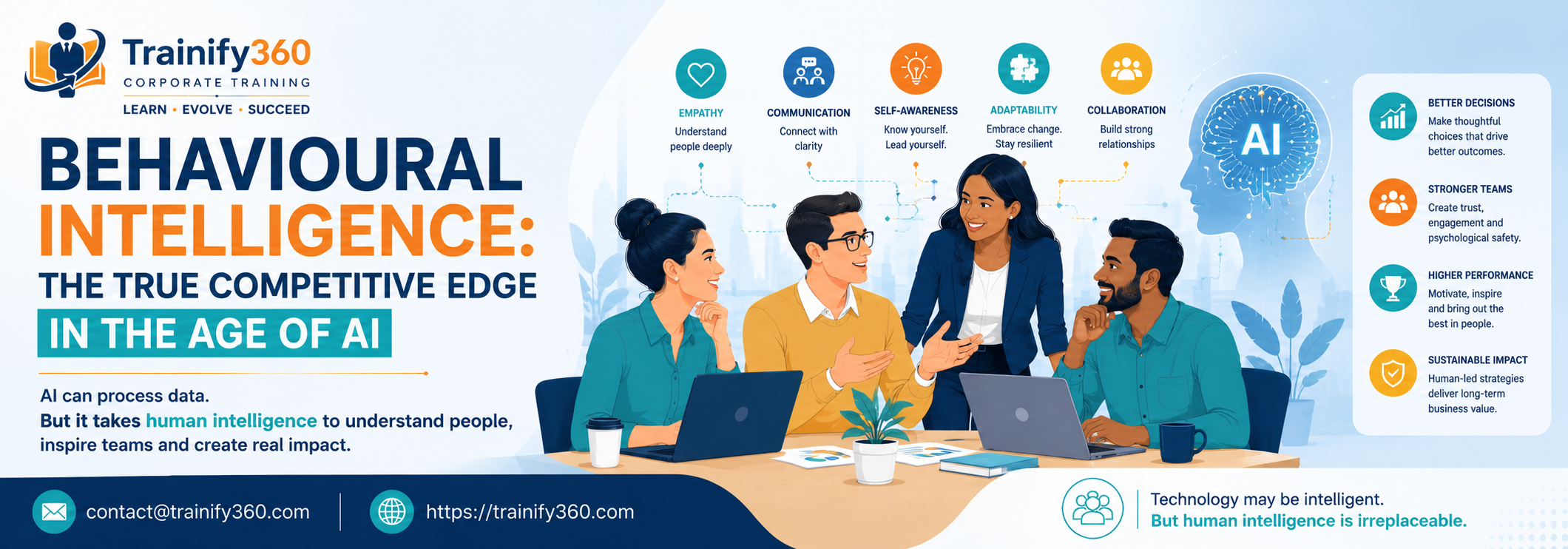
AI is reshaping how work gets done. Behavioural intelligence shapes how people respond to that change.
Technology Makes Work Faster. Behavioural Intelligence Makes It Better.
There's no denying how far artificial intelligence has come. It can analyse large volumes of information in seconds, automate repetitive work, generate reports, and uncover insights that would have taken teams days to identify.
These advances free people from routine tasks and create opportunities to focus on work that requires creativity, judgment, and collaboration.
But every organisation still depends on conversations that software can't have.
A manager helping an employee who feels uncertain about the future.
A salesperson earns the confidence of a client before discussing business.
A customer service executive turning a frustrating experience into a positive one.
A leader bringing calm and direction during periods of uncertainty.
These situations aren't solved by technology alone. They depend on empathy, communication, and sound judgment, the qualities that define behavioural intelligence.
Understanding Behavioural Intelligence
Behavioural intelligence is often mentioned alongside emotional intelligence, but the two aren't the same.
Emotional intelligence focuses on recognising and managing emotions. Behavioural intelligence goes a step further. It's the ability to understand how your actions influence others and to adjust your behaviour based on the situation, the people involved, and the outcome you're trying to achieve.
You can see behavioural intelligence in action every day.
It's the project lead who notices a quiet team member and encourages them to contribute.
It's the manager who gives constructive feedback without discouraging confidence.
It's the leader who remains composed during uncertainty, helping others stay focused instead of becoming overwhelmed.
These behaviours strengthen relationships, improve decision-making, and create workplaces where people are willing to collaborate openly.
The Skills That Matter Most Are Becoming More Human
One of the most interesting shifts happening in business is that, as technology becomes more capable, the qualities that distinguish exceptional professionals are becoming increasingly human.
Technical expertise will always be valuable. Organisations need people who understand systems, data, and emerging technologies.
Yet when executive teams discuss future leaders, technical skills are rarely the only factor they consider.
They look for people who communicate clearly.
Who earns trust.
Who influences without relying on authority.
Who remain calm under pressure.
Who helps teams move forward when situations become uncertain?
Those qualities often determine who succeeds in leadership roles. They're also the qualities that technology cannot easily replicate.
Leading Change Is About People First
Rolling out AI isn't simply about introducing new software. It's about helping people adapt to change.
Whenever organisations introduce new technologies, employees naturally ask themselves a series of questions.
Will my responsibilities change?
Will my skills still be relevant?
How will success be measured?
Leaders sometimes respond with implementation plans, timelines, and technical explanations. While those details matter, they don't always address what employees are really feeling.
People aren't just looking for information. They're looking for confidence.
Behaviourally intelligent leaders recognise this. They invite discussion instead of assuming silence means acceptance. They listen carefully, acknowledge concerns honestly, and explain why change is happening, not just what is changing.
Those conversations build trust, and trust makes change easier to embrace.
Employee Engagement Is Built Through Everyday Leadership
Many organisations rely on engagement surveys to understand how employees feel. The data is useful, but engagement itself isn't created by a survey.
It's created through everyday interactions.
A manager taking time to check in after a difficult week.
A leader recognising someone's contribution without waiting for an annual review.
A colleague is listening without interrupting.
A coach asking thoughtful questions instead of immediately offering solutions.
These moments may seem ordinary, yet they shape how employees experience the workplace.
Long after people forget project updates or weekly meetings, they remember how their leaders treated them.
Customer Experience Still Has a Human Side
Automation has improved customer service in many ways. Faster responses, self-service portals, and AI-powered support have raised expectations around speed and convenience.
Yet when customers face a complicated problem or an emotional situation, efficiency alone isn't enough.
They want someone who listens.
Someone who understands.
Someone who takes ownership of the issue.
Behaviourally intelligent employees recognize emotions that don't appear on a dashboard. They know when a customer needs reassurance instead of another scripted response. Those interactions build loyalty in ways automation never can.
Technology may improve the process, but people create the experience customers remember.
Collaboration Thrives Where Trust Exists
Modern business depends on collaboration across departments.
Marketing works closely with sales. Finance partners with operations. HR collaborates with technology teams. Success increasingly depends on how well people with different expertise work together.
That isn't always easy.
Each team has its own priorities, language, and perspective. Misunderstandings can slow progress even when everyone is working toward the same goal.
Behaviourally intelligent professionals help bridge those gaps. They ask questions before making assumptions. They listen to understand rather than simply waiting for their turn to speak. They focus on shared outcomes instead of departmental boundaries.
When trust becomes part of the culture, collaboration becomes much easier.
Developing Behavioural Intelligence
Unlike technical certifications, behavioural intelligence isn't developed through a single training session.
It grows through experience, reflection, coaching, and consistent practice.
Organisations that develop strong leaders create opportunities for employees to strengthen these capabilities over time.
Leadership coaching.
Peer feedback.
Role-playing difficult conversations.
Mentoring relationships.
Cross-functional projects.
Constructive coaching after real workplace situations.
The more employees practice these behaviours, the more naturally they become part of everyday leadership.
Questions Worth Asking
As organisations continue investing in AI, leaders should pause and ask a different set of questions.
Are managers spending enough time developing people, or are they focused only on performance metrics?
Do employees feel comfortable speaking honestly when they disagree?
Are communication, collaboration, and trust recognised alongside technical expertise?
Are future leaders learning how to coach people as effectively as they manage projects?
The answers often reveal whether an organisation is truly preparing for the future—not just technologically, but culturally.
Final Thoughts
Artificial intelligence will continue to change the way businesses operate. New capabilities will emerge, routine work will become increasingly automated, and decision-making will become more data-driven.
Yet one thing remains remarkably consistent.
Organisations succeed because of people.
People who communicate clearly.
People who build trust.
People who bring teams together during uncertainty.
People who help customers feel heard.
Behavioural intelligence sits at the centre of all these capabilities. It enables leaders to guide change with confidence, strengthens collaboration across functions, and creates cultures where people are motivated to contribute their best work.
Technology will continue to raise the bar for efficiency. Behavioural intelligence will continue to define leadership effectiveness.
The organisations that stand out over the next decade won't be distinguished by technology alone. They'll be recognised for combining intelligent systems with leaders who understand people, build meaningful relationships, and create workplaces where both innovation and human potential can thrive.